Pricing & Margins
Part of POD product pricing
Comparing bundles with single-item POD offers
Compare a POD bundle with one-item and normal-price basket sales using realistic delivery costs and order contribution.
Compare a POD bundle with a one-item order, then with the same items sold at their normal prices in one basket. The first comparison shows what the extra item adds; the second shows what the discount costs. Neither reveals what customers would have bought without the bundle.
Compare the same basket at two prices
Define the bundle’s products, variants, print positions and quantities. Use one Australian delivery destination and the same tax basis throughout. Calculate contribution for three cases:
| Case | Decision it informs |
|---|---|
| One standalone item | How much does the usual one-item order contribute? |
| Both items at normal prices in one basket | What would the same basket contribute without a bundle discount? |
| Both items at the bundle price | What does the proposed offer contribute after its actual basket costs? |
Don’t compare a bundled basket’s delivery charge with two separate orders as though the shipping costs were necessarily the same. If two separate purchases are a realistic alternative, calculate them as a fourth case using their separate charges.
Shipping depends on the exact items and route. Check the charge for the intended basket before setting the offer.
Work through a hypothetical comparison
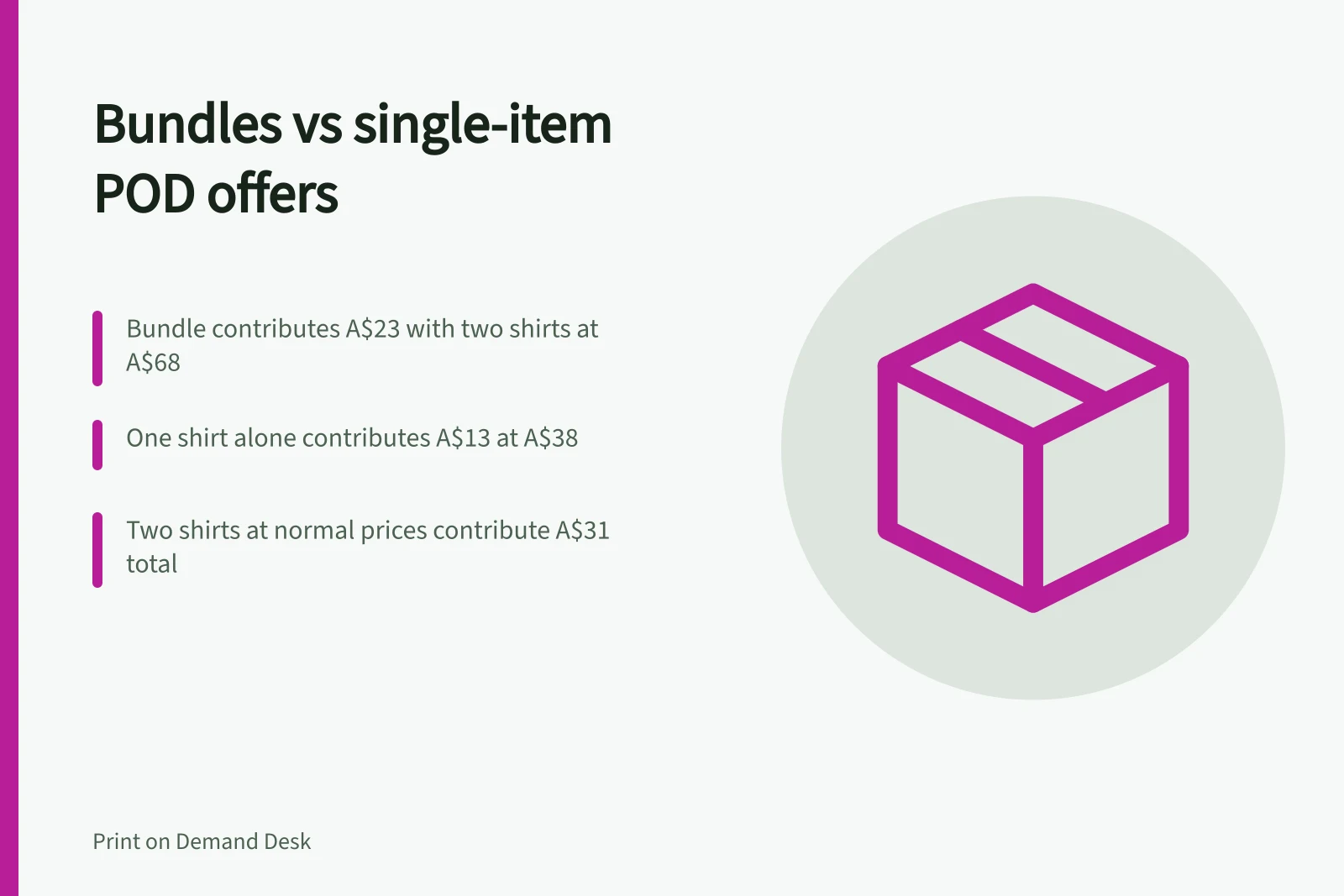
Suppose a printed shirt sells for A$38. With A$16 production, A$7 supplier delivery and A$2 selling fees, it contributes A$13.
Two shirts at their normal prices sell together for A$76. With A$32 production, A$10 basket delivery and A$3 selling fees, that order contributes A$31.
At a bundle price of A$68, with the same assumed costs and fees, contribution is A$23. The bundle contributes A$10 more than the one-shirt order and A$8 less than the same two-shirt basket at normal prices.
All figures are invented for teaching, ignore GST and are not supplier quotes. Real selling fees may change with the selling price, so recalculate both basket cases using the actual fee rules.
The commercial decision depends on buyer behaviour. If the bundle persuades a one-shirt buyer to add another, the extra contribution may justify the discount.
If it mostly discounts pairs buyers would have purchased anyway, contribution falls. A cost worksheet cannot establish which outcome will occur; use relevant order evidence before claiming the bundle increases profit.
Check the offer customers will receive
Different products or providers can mean separate parcels. Check the intended route and explain possible split delivery before purchase, without promising one parcel.
For a configurable bundle, check the highest-cost permitted variant combination and make each included item clear.
Review actual bundle orders for their variant mix, supplier charges and contribution. Keep the one-item option clear for buyers who do not want the pair.