Pricing & Margins
Part of Marketing a POD collection
Planning a small launch for a new collection
Set a focused POD launch question, check the offer, sequence relevant messages and review the first buying signals.
Plan a small POD collection launch around one question, a defined set of products and a review date. Ensure buyers can order the promoted offer. Use a few relevant messages to learn what needs attention before widening the campaign.
Set the question and limits
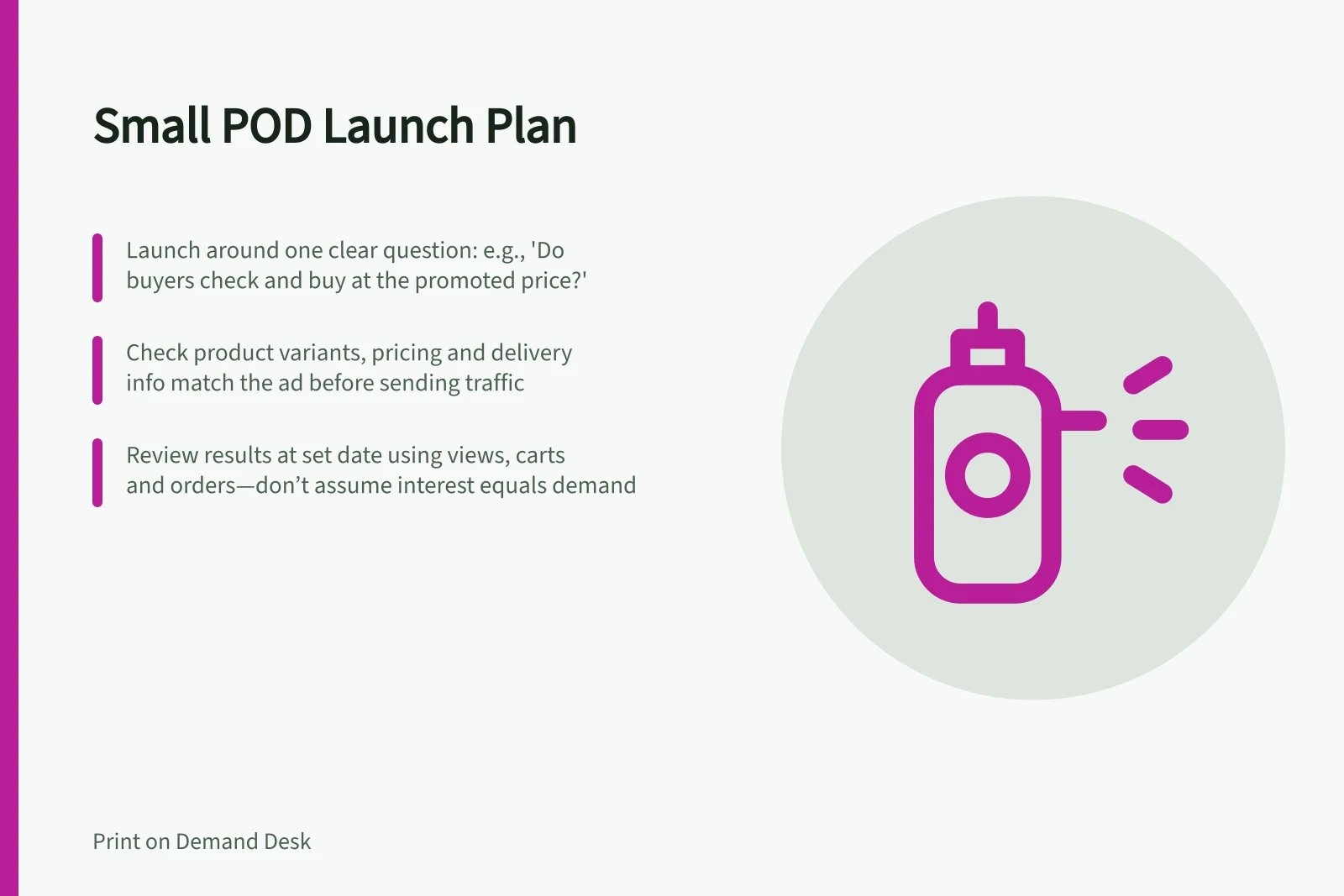
Choose something the first launch can reasonably reveal: whether people reached through a relevant channel inspect a featured product, and whether any buy it at the displayed price. Name the products included, the audience, the channel, the spending limit and the review date. These are limits for your own launch, not industry benchmarks.
Keep a record of the pages and promotional wording used. If artwork, price and message all change in the same period, it becomes harder to explain the response. A small launch may produce too few orders for a firm conclusion; its value can be a clearer next question.
Check the offer before sending traffic
Check each advertised product's available variants, images, copy, price and delivery information against the offer the buyer will see. Establish whether the intended order route is ready to accept orders. The detailed store-to-supplier submission check is an operations task; for the launch decision, each item needs a clear ready or hold result.
Hold an item if the advertised variant is unavailable, the page implies an unverified feature, or checkout changes the price or delivery terms presented in the promotion. Assign someone to answer customer questions and investigate order exceptions while the launch runs.
Sequence a few messages
Prepare a short introduction to the collection and a closer look at one or two designs. Each message should lead to a page that fulfils its promise. Choose channels that fit the intended audience instead of sending identical copy everywhere. Use a final reminder only when there is a genuine reason; do not invent scarcity or a deadline.
For Australian marketing email or SMS, consult the ACMA guidance on avoiding spam before sending. If a creator promotes the range, make sure claims about the offer are accurate and can be backed up; the ACCC says it can require businesses to back up claims made on social media.
Pros and Cons of Using Social Media for a Small Launch
- ProsHigh reach within niche communities; cost-effective for targeted audiences in Australia
- ConsRisk of misleading claims if not substantiated; spam complaints possible if messaging is excessive
Review and respond
During the launch, watch for broken destinations, unavailable variants, repeated questions and order problems. Correct any material listing error and record when the offer changed.
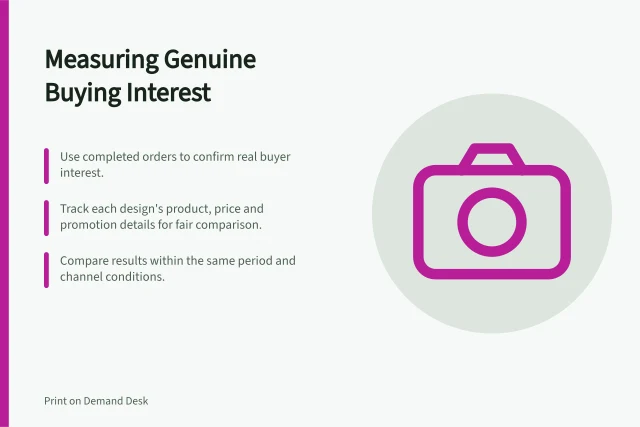
At the review date, read reliable product views, cart actions and completed orders alongside customer questions. Attention alone does not establish demand. If people repeatedly ask for dimensions, improve that information.
If a design draws visitors but few orders, examine the product page and offer before spending more. If valid orders arrive and fulfilment remains workable, consider a measured next round. Keep conclusions proportionate to the number of relevant visitors and orders.
Launch Performance Metrics to Monitor
- Product views (unique)
- Track via Shopify Analytics or Google Analytics
- Cart additions
- Indicates interest but not commitment
- Completed orders
- Primary indicator of demand
- Customer questions received
- E.g., 'What size is this?' or 'Is it made in Australia?'