Print Methods
Part of Print methods for POD products
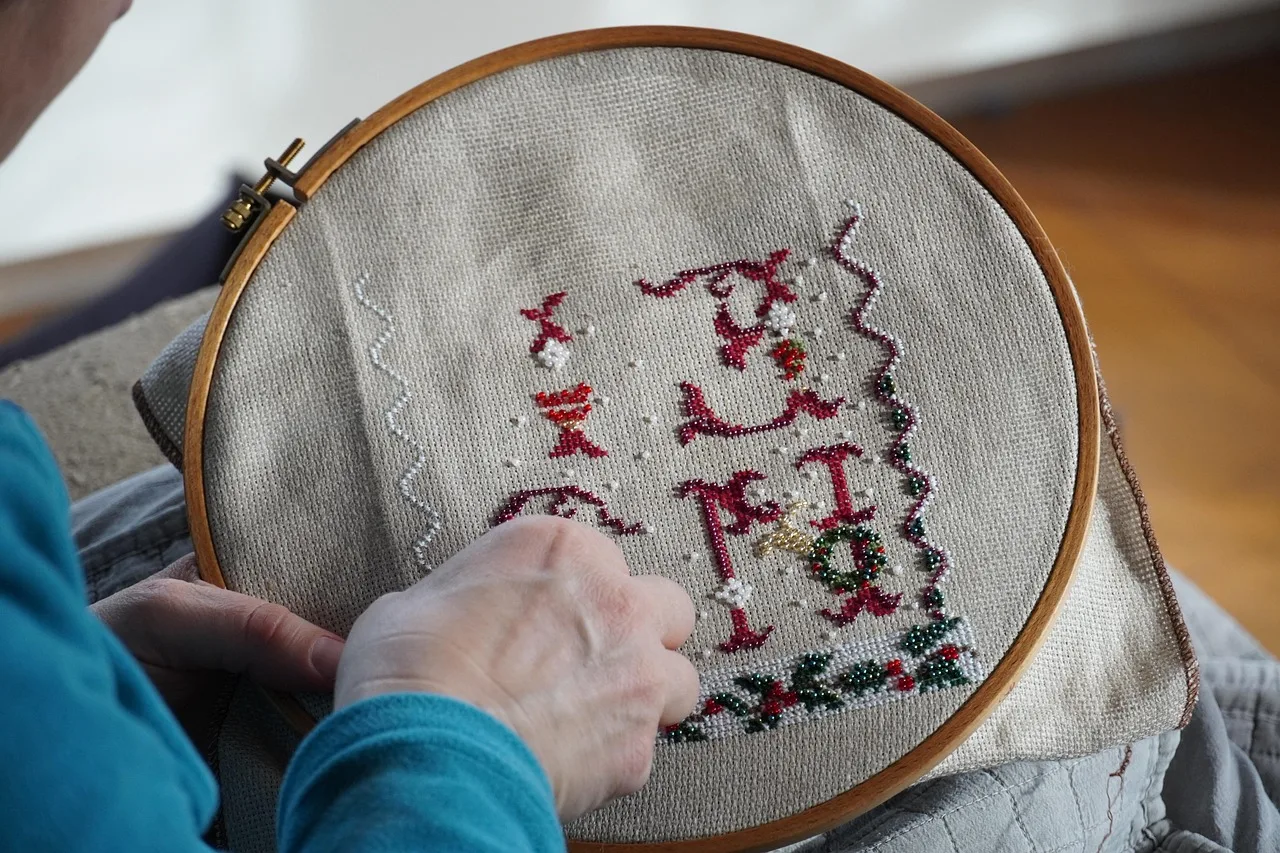
Embroidery versus printed decoration for apparel
Choose stitched or printed apparel decoration using artwork detail, garment support, placement and finished feel.
Choose flat embroidery for a compact, bold mark when raised thread is part of the design. Choose screen printing for solid-colour graphics, DTG for photographic detail on cotton, or DTF for detailed artwork across a wider range of fabrics. The garment and decoration position can change the choice.
Compare what the artwork requires
| Method | Artwork fit | Reproduction and feel |
|---|---|---|
| Flat embroidery | Compact, clear logos and solid shapes | Thread creates a raised, textured mark |
| 3D puff embroidery | Raised marks on structured caps | Dimensional stitching |
| Appliqué embroidery | Large designs such as a team-jacket decoration | Fabric is applied as part of the design |
| Screen printing | Solid, uniform spot colours and broad graphics | A smooth, flat ink layer; each colour needs a separate screen |
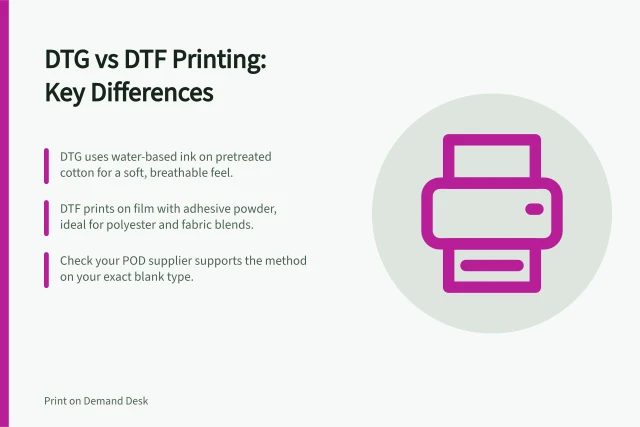
| DTG | Photographic and complex multi-colour artwork, especially on cotton | Ink goes directly into the fibres, giving a soft feel |
| DTF | Full-colour artwork, gradients and fine detail on cotton, polyester and blends | A transfer is heat-pressed onto the garment, leaving a layer on the surface |
Embroidery turns artwork into stitch paths, so tiny details can be lost: 2pt serif text and thin gradients are poor candidates. Koala-Tees lists embroidery logos and text with up to 16 thread colours for its offering; that figure is provider-specific.
Screen printing suits solid spot colours better than gradients or photorealistic images. DTG and DTF can reproduce photographic detail; Printful says its DTFlex process supports full-colour designs, including gradients and fine detail.
Account for the garment
Printful identifies cotton as best suited to DTG and says its DTFlex process suits cotton, polyester and blends. Embroidery needs fabric stable enough to hoop; a smooth-face knit gives the needle a stable surface, while small type can sink into heavily textured fabric.
DTG ink goes into the fibres and can be barely felt on white or light-coloured garments. DTF sits on top of the fabric as a thin, more noticeable layer. Embroidery feels raised and textured; a large embroidered back piece can feel heavy and “crunchy” on a thinner garment.
A position available for embroidery is not necessarily available for printing on the same item. Check the exact garment and placement: a compact left-chest mark, a structured cap front and a large graphic each call for different artwork and decoration choices.
Key Technical Considerations by Method
- Best fabric for DTG
- Cotton
- Fabrics suitable for DTFlex
- Cotton, polyester and blends
- Embroidery fabric requirement
- Stable fabric with smooth face for hooping
- Text size limitation in embroidery
- Small type can sink into heavily textured fabric
- Feel of DTG print
- Nearly invisible on white/light garments
- Feel of DTF print
- Thin, more noticeable layer on fabric surface
- Feel of embroidery
- Raised and textured; large pieces can feel heavy or crunchy
Choose the finished offer
Prepare artwork for the chosen method: simplify fine lettering or gradients for embroidery, use spot colours for screen printing, and reserve photographic detail for DTG or DTF. Check the design at its final size for clear lettering, open gaps and readable detail.
If texture is central to the choice, inspect a representative physical item. View the mark from a normal viewing distance, feel the decorated area and see how the garment sits.
Describe the finish clearly to buyers as stitched or printed, and name the print method where relevant.