Design Preparation
Part of POD design preparation
Avoiding copyrighted artwork and unlicensed brand elements
Check each image, font, logo and brand element in a POD production file. Confirm merchandise rights and hold uncertain artwork.
Before print, screen the exact production export for copyrighted artwork, fonts and brand or trade mark elements. Record the basis for using each element on the proposed merchandise, then release the file only if every required element is approved; otherwise hold or replace it.
Key Facts on Copyright and Trade Marks in Australia
- Trade Mark Search Tool
- Australian Trade Mark Search (ATMS) at IP Australia
- Fair Dealing Exceptions
- Only for research, criticism, parody, satire or news reporting
- Font Licence Requirement
- Possession does not equal commercial use rights
Check what is in the final design
Inspect the final export and create a production-file rights screen record. List every photograph, illustration, pattern, lettering element, logo and font, with its creator or supplier and the permission or other basis for the proposed use.
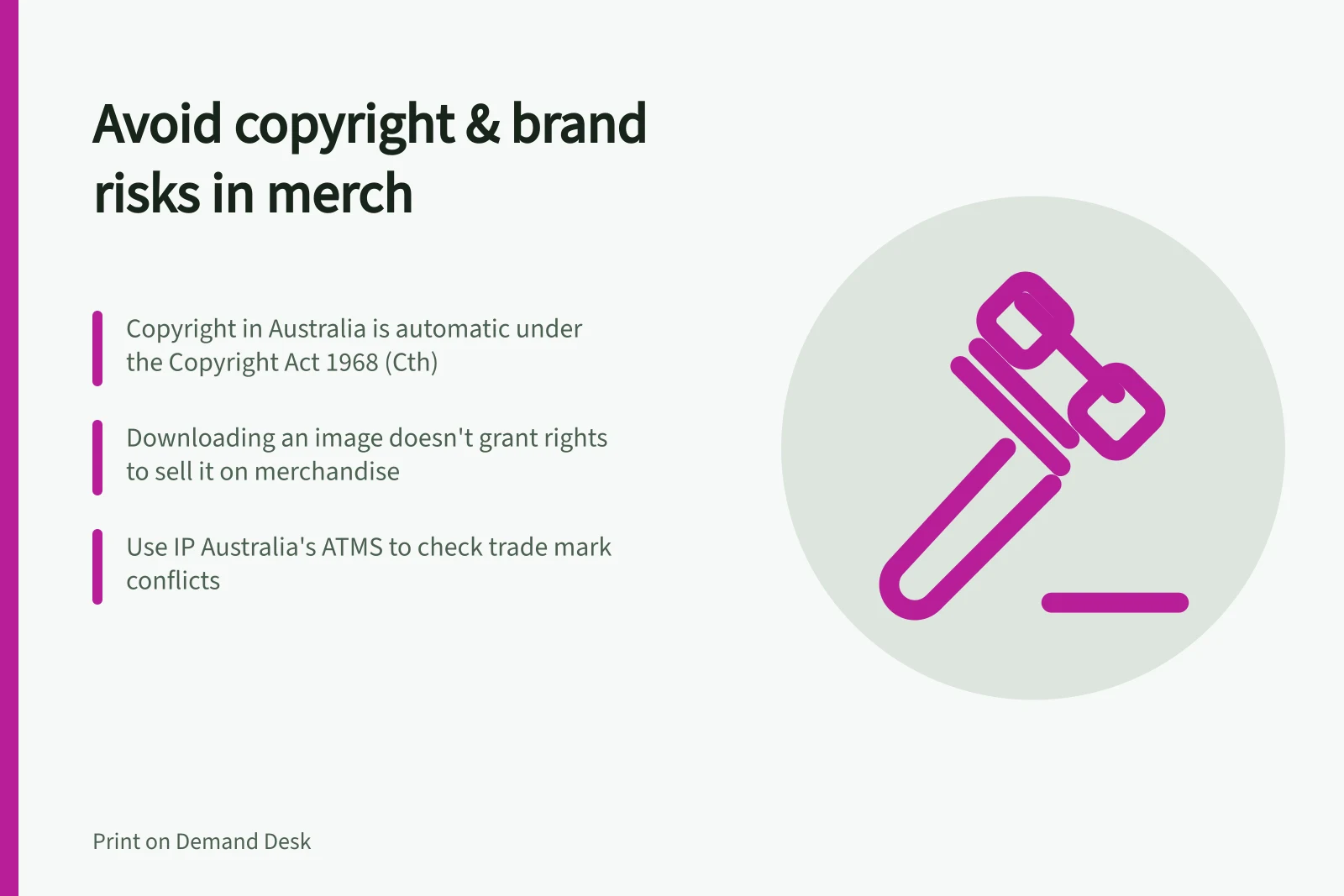
The Copyright Act 1968 (Cth) governs copyright in Australia. Copyright protects particular expression in material form, not ideas, and copyright in original artistic works is automatic; receiving a file or buying a physical work does not by itself establish permission to reproduce it on merchandise.
A marketplace download, customer upload or freelancer handover provides a file, but does not by itself establish the right to print it on products for sale. Finding an image online, giving credit or changing its colours does not by itself grant a merchandise licence.
Match permission to the product
Open the licence or agreement for each asset and check whether it permits commercial merchandise, modification and production by the intended print supplier. Note any conditions, such as attribution or quantity limits, in the rights screen record.
For each font, check that its licence covers the proposed merchandise use; possession of a font file alone does not establish that right. If another person supplied the artwork, confirm what rights they can grant and investigate obvious third-party material before approving the file.
Australian fair dealing provisions cover specified purposes, including research or study, criticism or review, parody or satire, and reporting the news. Do not treat fair dealing as a general merchandise permission; seek qualified advice if release depends on an exception.
Screen brand elements separately
A name, logo or slogan can raise trade mark questions even where copyright is unclear. Use IP Australia's Australian Trade Mark Search (ATMS), which searches registered and pending Australian marks and allows searches by text or image upload to compare existing trade mark logos.
Search sensible name variations and compare the design's wording, logo and slogan against marks used for the goods on which the design will appear. Similar marks used for the same or similar goods or services may cause confusion; an empty result is not clearance, because similar or unregistered rights may still matter.
Treat a recognisable brand logo, team badge or character image as a reason to verify authorisation. A small alteration, disclaimer or “inspired by” label does not automatically resolve the issue; seek qualified advice where release depends on a close similarity judgement.
Release or hold the file
In the production-file rights screen record, mark each element approved, replace or hold, and note the permission or agreement supporting its proposed use. Keep the record with the exact export it covers.
Release that export only when every required element has a documented basis for the proposed use and superseded artwork is absent. Hold or replace the file if any essential element remains uncertain.